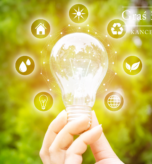
In today's article from the ESG in real estate series, we would like to introduce you to the basic issues related to green construction and green certificates related to buildings.
Green building is an approach to the design, construction, and management of buildings that ensures sustainable and responsible environmental impact. This concept encompasses a wide range of practices and technologies that reduce energy and water consumption, and minimize carbon dioxide emissions. The goal of green building is to create spaces that are not only user-friendly but also have minimal negative impact on the environment.
The main assumptions of green building focus primarily on environmental issues, but they also have a social dimension, including:
- effective management of resources, especially water and energy,
- use of low-impact building materials, including renewable and recycled materials,
- the use of energy-efficient heating, ventilation and air conditioning (HVAC) systems,
- implementing renewable energy technologies, such as photovoltaic panels,
- designing buildings to optimize natural lighting and ventilation,
- improving the well-being and health of users.
Green certificates provide formal recognition for buildings that meet specific criteria for sustainability and energy efficiency. Obtaining a certificate requires successfully completing the certification process. Typically, each certification body employs accredited experts who support the investor, from project analysis and confirmation of compliance with certification requirements to preparation and submission of appropriate documentation to the certification body.
The most popular certificates on the market include BREEAM, LEED and WELL.
BREEAM (Building Research Establishment Environmental Assessment Method)
This certification was introduced in 1990 by the British organization BRE (Building Research Establishment) and is used in over 70 countries. BREEAM certification is available not only to new buildings (New Construction), but also to existing buildings (In-Use), renovations (Refurbishment & Fit-Out), and new community and revitalization projects (Communities). The certification process utilizes the following evaluation criteria: management, energy, health and well-being, transport, water, materials, waste, land use and ecology, and pollution. BREEAM certification grades are as follows: Outstanding (85% or higher), Excellent (70% or higher), Very good (55% or higher), Good (45% or higher), and Pass (30%).
LEED (Leadership in Energy and Environmental Design)
This certification was developed by the nonprofit US Green Building Council (USGBC). Projects undergo a verification process that includes criteria such as carbon dioxide emissions, energy, water, waste, transportation, materials, health, and indoor environmental quality. Points are awarded for each of these categories, which, when added together, represent the LEED certification level: Platinum (80+ points), Gold (60-79 points), Silver (50-59 points), and Certified (40-49 points).
The goals of LEED certification are to reduce the contribution to climate change, improve human health, protect and restore water resources, protect and enhance biodiversity, promote sustainable materials, and improve the quality of life for communities. More than 105,000 buildings in over 180 countries are LEED certified, with some of the most well-known being Taipei 101 (LEED Platinum), The Empire State Building in New York (LEED Gold), Shanghai Tower in Shanghai (LEED Platinum), Two International Finance Center in Hong Kong (LEED Gold), and Willis Tower in Chicago (LEED Gold). In Poland, this certification is held by Malta House in Poznań (Platinum), Rondo 1 in Warsaw (Platinum), Rotunda PKO BP in Warsaw (Gold), The Bridge in Wrocław (Gold), and the High 5ive building complex in Kraków (Platinum).
WELL Building Standard
This certification, established in 2013 and administered by the International WELL Building Institute (IWBI), aims to provide a roadmap for creating and certifying spaces that promote human health and well-being. Projects must implement a specific set of features or strategies within 10 WELL concepts, including Air, Water, Thermal Comfort, Light, Movement, Nutrition, Sound, Mind, Community, and Materials.
They receive a certificate indicating one of four certification levels, based on the total number of points earned: Platinum (80 points, minimum 3 points for each concept), Gold (60 points, minimum 2 points for each concept), Silver (50 points, minimum 1 point for each concept), Bronze (40 points).
Certificates can be awarded for an indefinite period, such as BREEAM and LED for new buildings, or for three years, such as BREEAM and LED for existing buildings, with the possibility of renewal. The WELL certificate, on the other hand, is valid for three years.
Building certification offers many benefits, including increased property value, reduced environmental impact, reduced operating costs, and improved health and well-being of building occupants.
In summary, investing in green buildings and the increasing number of buildings with green certificates is an investment in a sustainable future that benefits both the environment and residents.
This article is for informational purposes only and does not constitute legal advice.
Legal status as of December 13, 2024
authors:

Be the first to receive our articles and legal alerts, straight to your inbox! Sign up for our newsletter by clicking the link or contact us at social@kglegal.pl to personalize your content.