Dotychczasowe przepisy dedykowane świadczeniu usług w zakresie kryptoaktywów na terenie Unii Europejskiej nie były uregulowane kompleksowo, a jednym z przejawów zainteresowania prawodawcy unijnego obszarem kryptoaktywów było wprowadzenie przepisów dotyczących „walut wirtualnych” w dyrektywie AML V (Anti-Money Laundering) oraz nałożenie na państwa członkowskie obowiązku prowadzenia rejestrów dla podmiotów prowadzących działalność w zakresie walut wirtualnych (dawniej VASP).
Ponadto sytuacja prawna krajów członkowskich w kontekście świadczenia usług w zakresie kryptoaktywów nie była jednolita, co powodowało odmienne traktowanie prowadzonej działalności przez każdy z krajów. Część krajów przyjmowała bardziej liberalne podejście, zaś druga część była bardziej restrykcyjna co do świadczonych usług.
Wraz z wejściem w życie rozporządzenia MiCA (Markets in Crypto-Assets), sytuacja prawna dostawców usług w zakresie kryptoaktywów (dalej CASP) ulegnie znacznym zmianom, poprzez ujednolicenie przepisów na obszarze Unii Europejskiej, wprowadzenie zezwolenia na świadczenie usług w zakresie kryptoaktywów, a także wzmocnienie nadzoru państw członkowskich nad działalnością prowadzoną przez CASP.
Rozróżnienie usług w zakresie kryptoaktywów
Rozporządzenie MiCA wprowadza katalog usług, które CASP może świadczyć po uzyskaniu stosownego zezwolenia, są nimi:
- zapewnianie przechowywania kryptoaktywów i administrowania nimi w imieniu klientów;
- prowadzenie platformy obrotu kryptoaktywami;
- wymiana kryptoaktywów na środki pieniężne;
- wymiana kryptoaktywów na inne kryptoaktywa;
- wykonywanie zleceń związanych z kryptoaktywami w imieniu klientów;
- plasowanie kryptoaktywów;
- przyjmowanie i przekazywanie zleceń związanych z kryptoaktywami w imieniu klientów;
- doradztwo w zakresie kryptoaktywów;
- zarządzanie portfelem kryptoaktywów;
- świadczenie usług transferu kryptoaktywów w imieniu klientów.
Wymogi związane z uzyskaniem zezwolenia na świadczenie usług
Jedną z najważniejszych zmian, które przepisy MiCA wprowadzają dla obecnych i przyszłych CASP jest wprowadzenie wymogu uzyskania przez nich zezwolenia na świadczone usługi w zakresie kryptoaktywów. Aby uzyskać przedmiotowe zezwolenie, CASP muszą spełnić poniższe wymogi:
- muszą być osobą prawną lub innym przedsiębiorstwem; lub jednym z podmiotów finansowych wymienionych w MiCA (np. instytucją kredytową, instytucją pieniądza elektronicznego);
- muszą mieć siedzibę główną w państwie członkowskim, w którym prowadzą przynajmniej część swojej działalności związanej z usługami w zakresie kryptoaktywów. Ich miejsce faktycznego zarządu musi znajdować się w Unii, a co najmniej jeden z dyrektorów musi mieć miejsce zamieszkania w Unii;
- muszą złożyć do właściwego organu swojego macierzystego państwa członkowskiego (w przypadku Polski będzie to KNF) wniosek o zezwolenie na prowadzenie działalności w charakterze dostawcy usług w zakresie kryptoaktywów. Przekazywane we wniosku informacje zależeć będą od rodzaju usług, jakie CASP będzie świadczył.
Transgraniczne świadczenie usług w zakresie kryptoaktywów
Uzyskanie zezwolenia przez CASP pozwala na łatwiejsze świadczenie swoich usług w innych krajach członkowskich Unii Europejskiej. CASP zainteresowany świadczeniem swoich usług transgranicznie powinien przedstawić właściwemu organowi macierzystego państwa członkowskiego:
- wykaz państw członkowskich, w których będzie zamierzał świadczyć swoje usługi;
- usługi w zakresie kryptoaktywów, które zamierza świadczyć w wymiarze transgranicznym;
- datę rozpoczęcia planowanego świadczenia usług w zakresie kryptoaktywów;
„Reverse solicitation” – czyli wyjątek dla krajów trzecich
Rozporządzenie MiCA podobnie jak MiFID II (Dyrektywa w sprawie rynków instrumentów finansowych), wprowadza model „reverse solicitation”. W przypadku MiCA, model ten pozwala na świadczenie usług w zakresie kryptoaktywów przez przedsiębiorstwa z państw trzecich (nieposiadających zezwolenia CASP) na rzecz klientów z obszaru Unii Europejskiej, jednakże wyłącznie z inicjatywy klienta.
Oznacza to, że klient pochodzący z obszaru Unii może z własnej inicjatywy skorzystać z usług świadczonych przez przedsiębiorcę z państwa trzeciego, nieposiadającego zezwolenia CASP. Jednak w drugą stronę, taki przedsiębiorca nie może przyczynić się do tego, że to on wyjdzie z inicjatywą świadczenia swoich usług na rzecz europejskiego klienta. W takiej sytuacji musi już uzyskać zezwolenie.
Przypominamy o zapisach na nasz darmowy webinar!
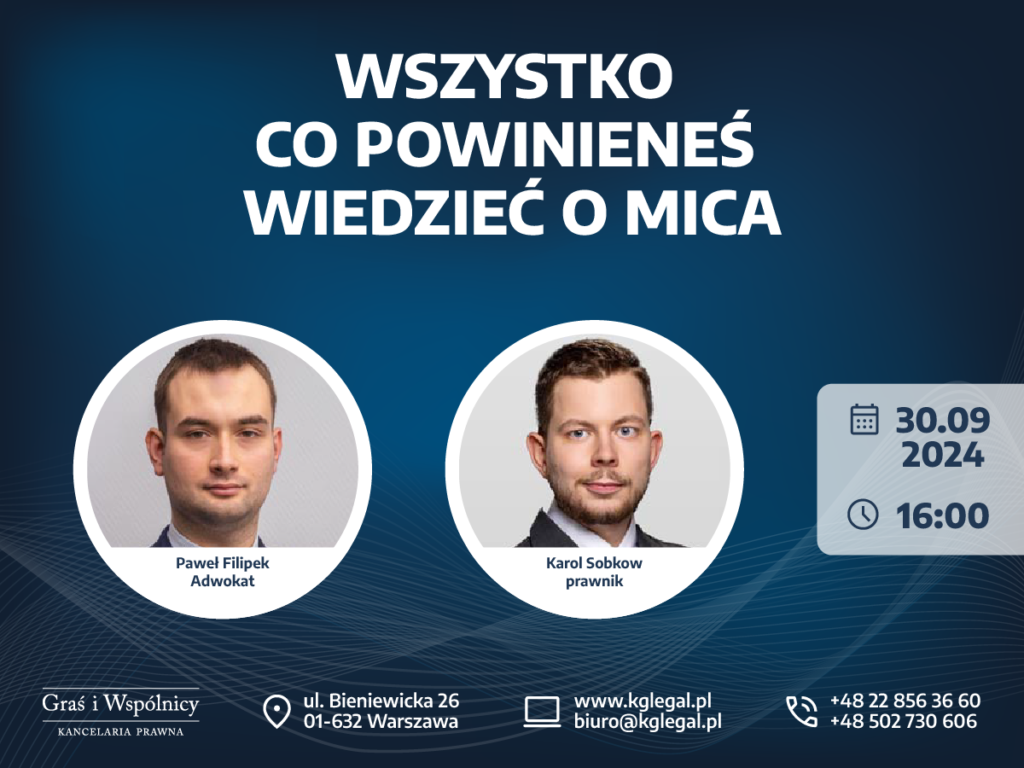
Serdecznie zapraszamy osoby zainteresowane, prowadzące lub planujące działalność w obszarze kryptoaktywów na organizowany przez Kancelarię webinar, który poświęcony będzie w całości rozporządzeniu MiCA. Webinar planowany jest na 30 września 2024 r. o godz. 16. Zapisy dostępne są po kliknięciu w link.
Niniejszy alert ma charakter informacyjny i nie jest to porada prawna.
Stan prawny na dzień 26 września 2024 r.
autor: